
Waterjet cutting
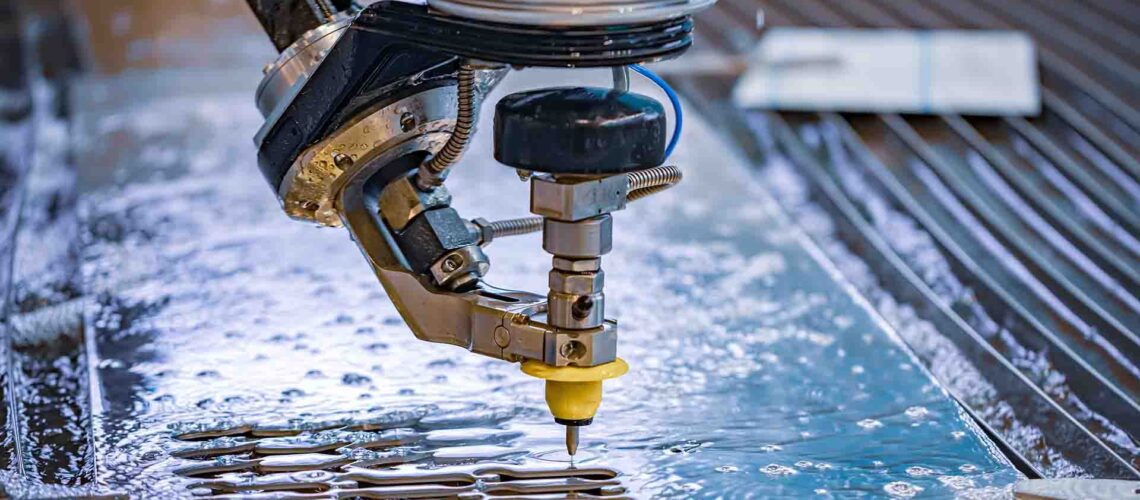
Waterjet cutting uses a high-pressure stream of water, sometimes mixed with abrasive particles, to cut through a wide variety of materials. Unlike plasma or laser, waterjet cutting is a cold-cutting process — meaning there is no heat distortion, no hardening, and no burnt edges, making it ideal for delicate, thick, or heat-sensitive materials.
Specifications
-
Cutting Thickness Range
-
Metals, composites, stone, glass, plastics: 1mm – 150mm+
-
Capable of cutting extremely thick panels that other methods cannot handle.
-
-
Cutting Accuracy & Tolerance
-
Very high precision: ±0.1mm – 0.3mm.
-
Narrow kerf: 0.5mm – 1.5mm.
-
Maintains accuracy even on thick materials.
-
-
Cutting Speed
-
Slower than plasma and laser but highly precise.
-
Speed depends on material hardness and thickness.
-
-
Edge Quality
-
Smooth, clean, burr-free edges.
-
No heat-affected zone (HAZ).
-
Minimal finishing required.
-
-
Compatible Materials
-
Metals: Steel, Stainless Steel, Aluminum, Brass, Copper, Titanium
-
Non-metals: Glass, Stone, Ceramics, Plastics, Rubber, Composites
-
Laminated and layered materials.
-
-
Panel Size Handling
-
Standard: up to 4000mm x 2000mm (depending on machine bed size).
-
Applications
-
Stone and glass panels for architecture.
-
Aerospace & automotive components.
-
Decorative panels with complex patterns.
-
Heat-sensitive materials (plastics, composites).
-
Thick steel plates and industrial machinery parts.
-
Precision prototypes and custom cutouts.