
Gas Metal Arc Welding (GMAW)
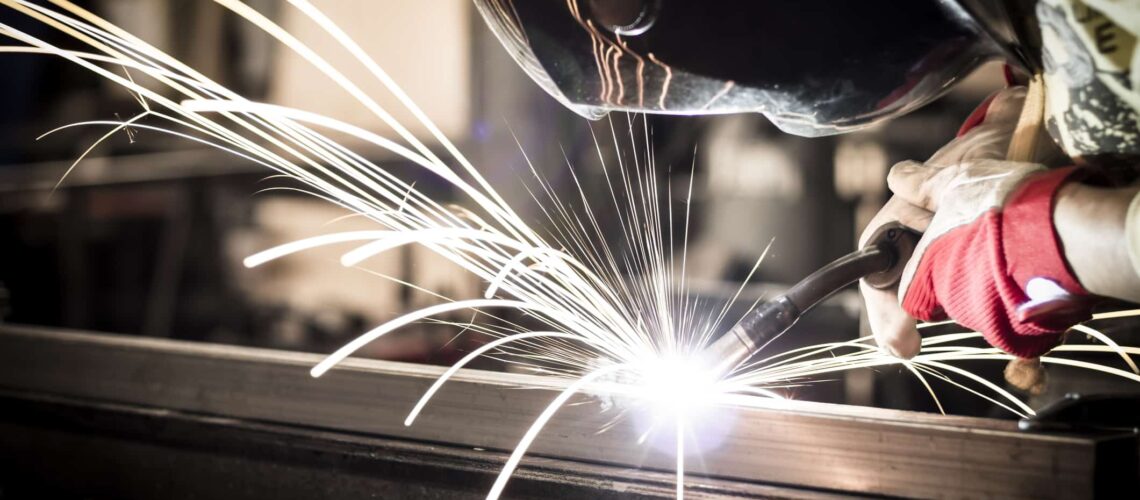
Gas Metal Arc Welding (GMAW), commonly known as MIG Welding (Metal Inert Gas), is a process that uses a continuous wire electrode fed through a welding gun, shielded by an external gas (such as Argon or CO₂). It produces clean, efficient, and high-quality welds with minimal spatter compared to Stick Welding.
Specifications
-
Material Thickness
-
Best for 0.5mm to 12mm thick metals.
-
Can handle up to 40mm with multi-pass welding.
-
-
Compatible Materials
-
Mild Steel
-
Stainless Steel
-
Aluminum
-
Copper & Nickel alloys
-
-
Weld Quality & Strength
-
Produces smooth, neat, and strong welds with less slag.
-
High precision, especially on thin metals.
-
-
Portability
-
Less portable than SMAW (requires gas cylinder and wire feeder).
-
Mostly used in workshops or controlled environments.
-
-
Power Source
-
Runs on DC constant voltage power supply.
-
-
Environment
-
Best used indoors or in controlled environments (wind can disrupt shielding gas).
-
Advantages
-
High welding speed (more efficient than SMAW).
-
Produces clean welds with minimal finishing required.
-
Easy to learn and operate (semi-automated process).
-
Ideal for mass production and manufacturing industries.
Limitations
-
Requires shielding gas → not ideal for outdoor windy conditions.
-
Equipment is more expensive and less portable compared to Stick Welding.
-
Limited penetration on very thick metals without multiple passes.
Applications
-
Automotive manufacturing & repair (car bodies, chassis).
-
Metal fabrication & workshops.
-
Furniture and appliance manufacturing.
-
Light to medium industrial fabrication.
-
Construction of thin-to-medium steel structures.