
Flux-Cored Arc Welding (FCAW)
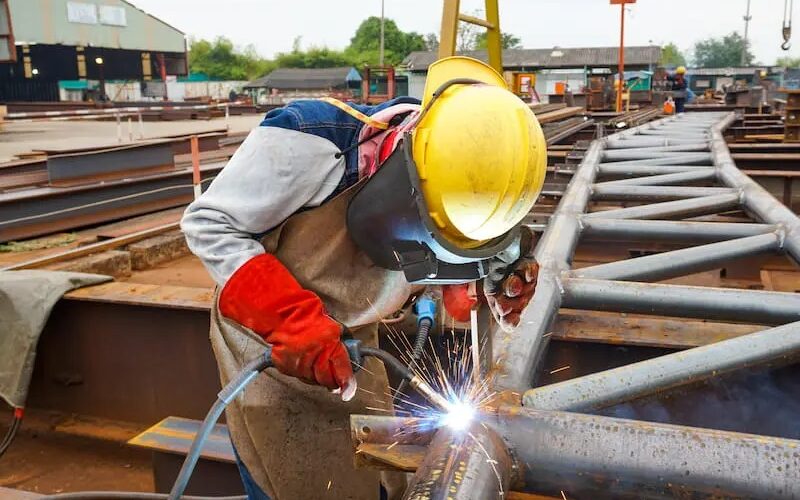
Flux-Cored Arc Welding (FCAW) is a semi-automatic or automatic welding process that uses a hollow wire electrode filled with flux. The flux inside the wire provides the shielding, sometimes supplemented with external shielding gas. FCAW is known for its high deposition rates, deep penetration, and ability to weld outdoors in windy conditions, making it ideal for heavy-duty and structural applications.
Specifications
-
Material Thickness
-
Ideal for 5mm to 25mm thick materials.
-
Can handle very thick sections with multi-pass welding.
-
-
Compatible Materials
-
Carbon Steel
-
Stainless Steel
-
Low-Alloy Steels
-
-
Weld Quality & Strength
-
Produces strong welds with deep penetration.
-
More spatter than MIG or TIG but stronger in heavy-duty work.
-
-
Portability
-
More portable than MIG (can be used without external gas).
-
Works well for onsite and outdoor welding projects.
-
-
Power Source
-
Typically DC constant voltage.
-
-
Environment
-
Excellent for outdoor, windy, and harsh environments.
-
Performs better than MIG in construction sites.
-
Advantages
-
High productivity → faster than MIG and Stick for thick metals.
-
Can be used with or without shielding gas (versatile).
-
Great penetration for strong welds on thick steel.
-
Performs well outdoors, even in windy conditions.
-
Less operator skill required compared to TIG.
Limitations
-
Produces more smoke and spatter than MIG/TIG.
-
Weld appearance is rougher (requires post-weld cleaning).
-
Not suitable for very thin metals (<3mm).
-
Equipment is less portable than Stick welding.
Applications
-
Construction & Structural Steel Fabrication
-
Shipbuilding & Offshore Structures
-
Heavy Equipment Manufacturing
-
Pipeline & Pressure Vessels
-
Bridge & Infrastructure Projects
-
Outdoor Welding Projects